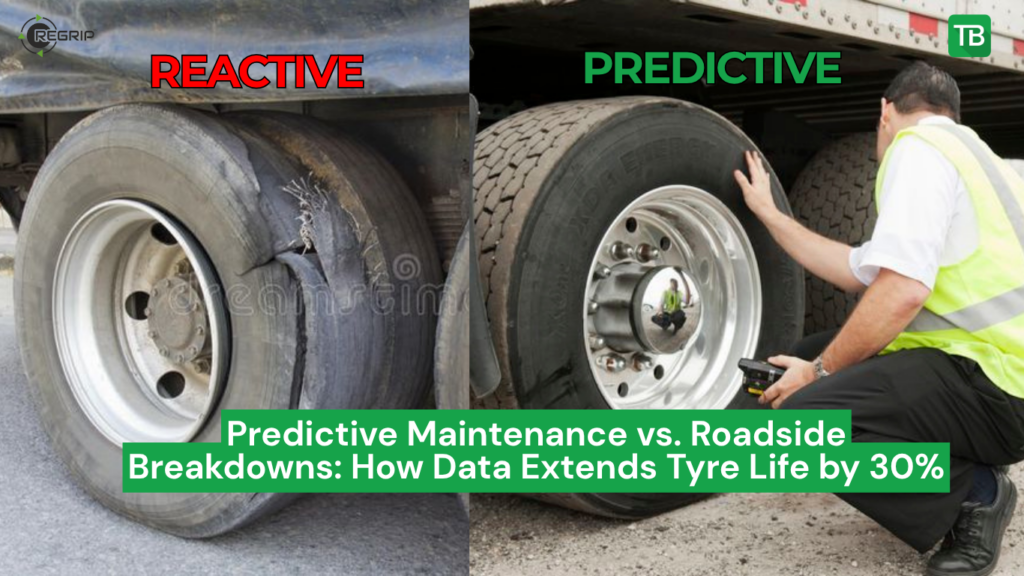
Imagine this: Your commercial vehicle is hauling high-value cargo on a tight deadline. Mid-highway, a tyre blows out. The vehicle is stranded, the delivery is delayed, emergency roadside assistance costs skyrocket, and your customer relationship takes a massive hit.
For years, logistics enterprises and transport fleet operations have treated tyre failures as an unavoidable cost of doing business. You run the rubber until it fails, and then you deal with the crisis.
This reactive approach is burning your profits. The future of profitable fleet logistics relies heavily on shifting from emergency panic to data-driven Predictive Maintenance. By utilizing modern fleet management SaaS platforms, operators can extend average tyre life by up to 30%.
Here is exactly how data turns a major operational vulnerability into a predictable, optimized asset class.
The Anatomy of a Roadside Breakdown vs. Predictive Care
When you wait for a tyre to fail on the road, you aren’t just paying for a replacement. You are paying for operational downtime. Predictive maintenance uses real-time mileage tracking, automated rotation alerts, and wear pattern history to schedule maintenance before the rubber hits its breaking point.
Let’s look at how these two management philosophies compare in the real world:
| The Scenario | Reactive Maintenance (The Old Way) | Predictive Maintenance (The Data-Driven Way) |
| Tread Wear Management | Inspected visually only when the vehicle returns to the hub—often too late. | Automated tracking alerts teams exactly when a tyre hits critical wear depth thresholds. |
| Axle Alignment & Rotation | Done randomly or when a driver complains of heavy pulling. | Scheduled automatically based on exact distance milestones, preventing uneven shoulder wear. |
| Breakdown Risk | High. Sudden blowouts cause unscheduled downtime and safety hazards. | Minimized drastically. Problematic tyres are pulled and serviced during scheduled hub stops. |
| Casing Preservation | Low. Run-flat or blown tyres ruin the internal casing entirely. | High. Timely removals ensure the casing remains healthy for multiple cycles, avoiding the scrap pile. |
The Three Pillars of Data-Driven Tyre Optimization
Shifting your operations to a predictive model doesn’t require a complete overhaul of your workforce. It simply requires replacing manual guesswork with three core digital indicators:
- Distance-Based Rotation Scheduling: Tyres on the drive axle experience vastly different friction and load forces compared to steer or trailer axles. Data logs track the exact mileage of each individual serial number, triggering automated rotation alerts to ensure perfectly even wear across the vehicle.
- Early Alignment Detection: When a vehicle’s alignment is off, the tyre data shows it immediately through accelerated tread wear metrics. Catching a mechanical alignment issue early via predictive checks saves both the tyre and improves overall fuel efficiency.
- Casing Health Diagnostics: The real value of a commercial tyre lies in its structural casing. By tracking historical wear patterns digitally, fleet managers can precisely remove a tyre at the exact millimeter of remaining tread depth required to guarantee a successful second life, maximizing the asset’s total operational lifecycle.
The Ultimate ROI
Running a tech-forward transport operation means removing unpredictability from your balance sheet. By integrating your fleet with a dedicated B2B digital marketplace and fleet management SaaS platform, you gain complete visibility over your second-highest operational expense.
A 30% extension in tyre life means fewer new purchases, maximized asset utilization, and a complete elimination of emergency roadside repair bills. Stop waiting for the next blowout put your tyre data to work and secure your profit.